
Finding Woodlawn Residents from Records
Every lookup needs a fixed start. An address suits a parcel question. A full name suits a recorded event. Woodlawn splits the answers, because the county assessment record, the Circuit Court land index, court case indexes, and the Virginia Room's historical collections each cover different ground. A tax-card owner is not automatically the resident. A court-name match does not prove two same-named people are one. Date each result and seek a second independent record.
Woodlawn is a census-designated place inside Fairfax County, not an incorporated city. Its common Alexandria mailing label can steer a searcher toward the wrong government office. Use Fairfax County as the records jurisdiction. Then record the postal city, street form, unit, and date of every search. Keep property, voter, court, and historical evidence in separate lanes. The order below does exactly that.
- Search the county property record by the name or address already in hand. Save the parcel number, situs, mailing address, and legal description.
- Follow a recorded ownership question through the grantor-grantee index and the deed's book, page, or instrument reference.
- Use the voter-status tool only for the voter or an expressly authorized user. For public list access, ask the Fairfax registrar about the controlled list route.
- For a past household, compare directory volumes, census years, newspapers, and the Virginia Room's local-history collections.
- When a nonexempt record is offline, make a focused request to its custodian and ask for a cost estimate first.
Woodlawn Resident Records Offices
A Woodlawn residents directory draws on several offices. The Department of Tax Administration maintains assessment data and the iCare property search. The Circuit Court Clerk keeps recorded land instruments, probate material, marriage licenses, and circuit files. The Office of Elections holds the voter rolls under Virginia law. None maintains a single household list. The separation is useful. An address, a title transfer, a court case, and a voter status are different facts with different access rules.
Fairfax Circuit Court Clerk
4110 Chain Bridge Road
Fairfax, VA 22030
703-691-7320
Fairfax DTA Real Estate
County assessment and parcel records
Fairfax County, Virginia
703-222-8234
Fairfax Office of Elections
12000 Government Center Parkway, Suite 323
Fairfax, VA 22035
703-222-0776
One parcel is easy. For a whole road, follow the detailed Woodlawn street directory workflow rather than merging office results without a source date.
Woodlawn iCare Property Records
Fairfax iCare is the strongest current anchor for a Woodlawn property connection. Its Property Location search accepts a number, unit number, street, and optional suffix. Leave the suffix blank to widen the results. An asterisk broadens a street name too. A returned parcel profile can show owners, parcel information, legal description, sales, values, tax data, tax-map number, land use, zoning, utilities, and historic-overlay flags. Ownership and sales data update twice each week. Values show for the listed January 1 assessment years.
The iCare screen describes a parcel, not its occupants. The property location is called the situs. A tax mailing address may sit elsewhere, and an owner may request internet withholding of the owner name. Save both fields rather than reading either one as present occupancy.
| iCare field | Input type | Use in a Woodlawn search |
|---|---|---|
| Number | Text | Enter the street number for a parcel lead. |
| Unit# | Text | Refine an apartment or condominium address. |
| Street | Text | Use a name or * wildcard for a broader street result. |
| Suffix | Dropdown | Optional; leave blank if a search misses a street variant. |
| Map Number | Mode/text | Use the tax-map reference saved from a parcel card. |
The iCare address form splits a Woodlawn lookup into clear pieces. Number, unit, street, and suffix each get their own box, alongside sorting and results controls that shape what a residents directory search returns.
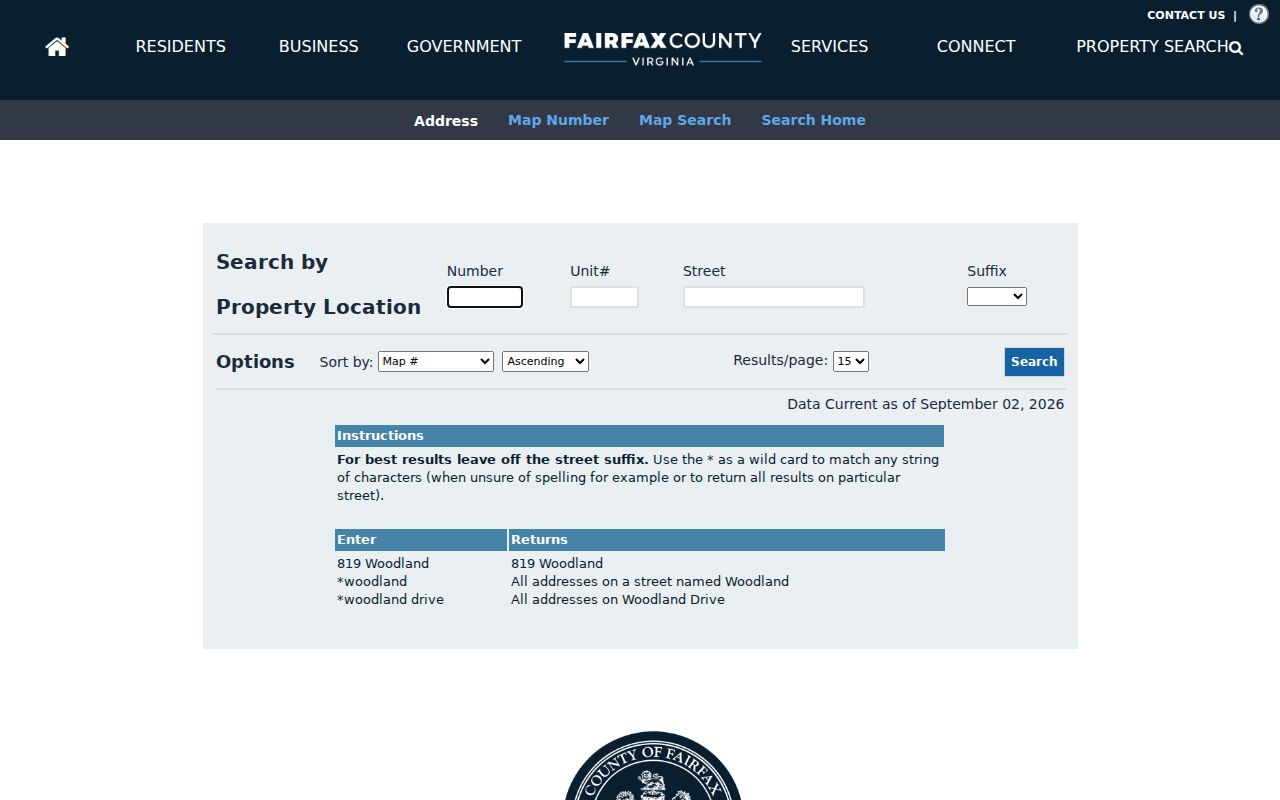
Separate fields have a real advantage. You can test a street spelling or keep a unit number intact without letting a mailing-city label drag you into the wrong Fairfax County jurisdiction.
- Parcel
- A defined piece of land tracked by the assessment system and tax-map number.
- Situs
- The physical property location, which can differ from the owner's tax-mailing address.
- Index
- A searchable finding aid that points to a record rather than proving every fact in the record.
- Criss-cross directory
- An address-organized historical directory section, when a volume includes one.
Woodlawn Deed and Estate Trails
A recorded transfer ties a Woodlawn name to a parcel. No mailing line could do that as firmly. Pull the owner name and tax-map number from iCare first. Then turn to the Fairfax Circuit Court's Court Public Access Network, called CPAN, or a courthouse terminal. Search that owner as grantee. The acquisition deed gives you the grantor and the recording date. You also get a book and page or instrument number, the legal description, and often an earlier reference. Next, run the prior seller as grantee. Repeat that chain as far back as the records allow. Older deeds favor a lot number, subdivision, metes-and-bounds description, tract name, or even a landmark. They rarely use a modern street address.
CPAN covers official land records from 1742 to the present. Remote access, though, runs on subscriptions. The county lists a $150 quarterly user fee. Courthouse public terminals are free for anyone doing the digging personally. Pre-1945 deed books belong to the Historic Records Center path. Staff will explain the system, but extensive title research stays on your shoulders. That split matters once a web search stalls. One index is paid and remote. The other is free but in person.
The CPAN overview lays out the land-record route and its account-based option.
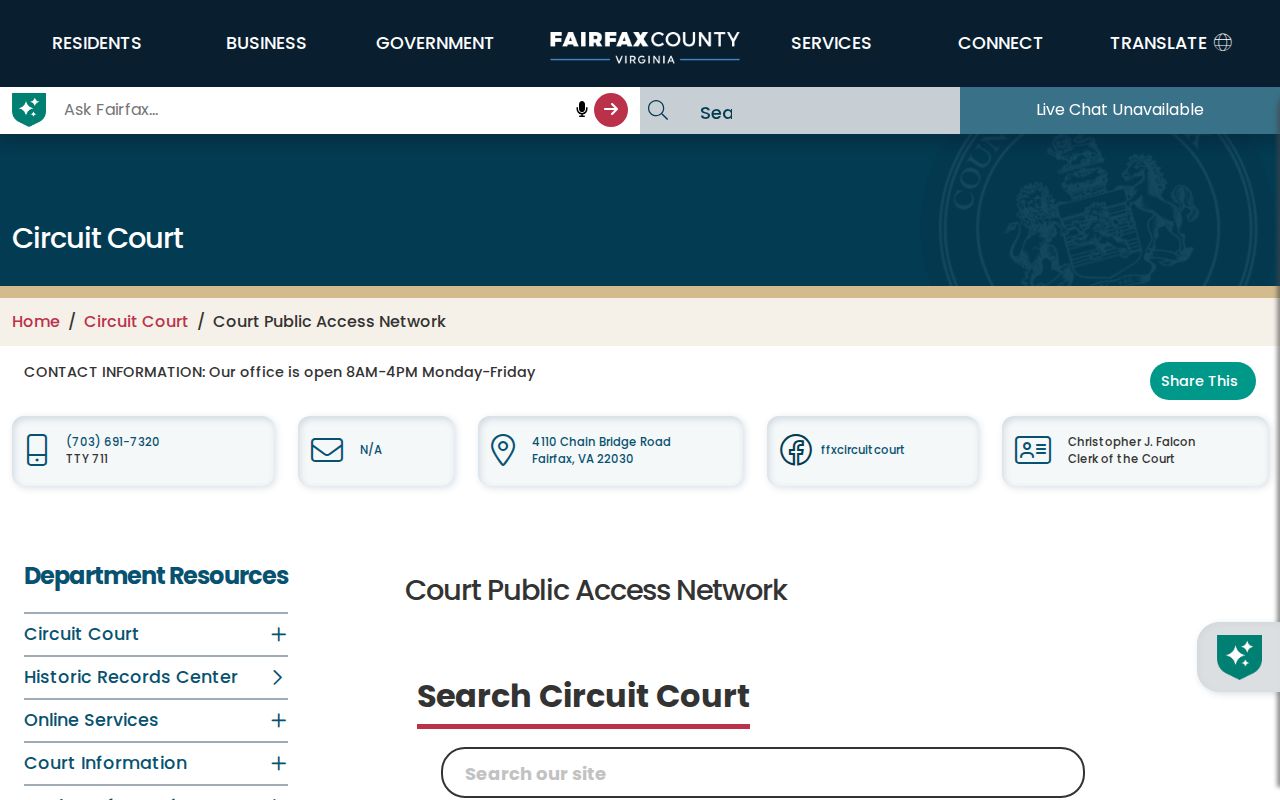
A deed follows recorded title, not occupancy. Anyone may have lived in the house, so keep the legal description beside the modern parcel number before tying a historic name to an address.
| Free counter route | Remote CPAN route |
|---|---|
| Courthouse terminals and Historic Records Center holdings support self-directed research. | Subscription access supports remote searching of covered CPAN record families. |
| Useful when a document or older book is not available through the web interface. | Useful for a current grantor-grantee lead, subject to record-specific cutoffs. |
Woodlawn Court Index Name Checks
The Fairfax Circuit eCaseSearch portal is free and open to anyone. It indexes non-confidential civil and criminal cases back to October 18, 2004. Pick Civil or Criminal first, then search by party name or case number. A name search needs at least two letters of a last name or company name. Add a first name to narrow things down. Only 100 results display at a time. The index can hand you a case number, a hearing date, or docket details. But the actual documents stay with the clerk. Sealed material never appears here.
The Virginia Judiciary tools handle Fairfax General District Court. They cover locality searches by name, case number, or hearing date. Fresh entries sometimes lag behind. Before a same-name hit feeds a Woodlawn residents directory search, weigh it against the locality and the party role. Check the case number and the clerk-held file itself too.
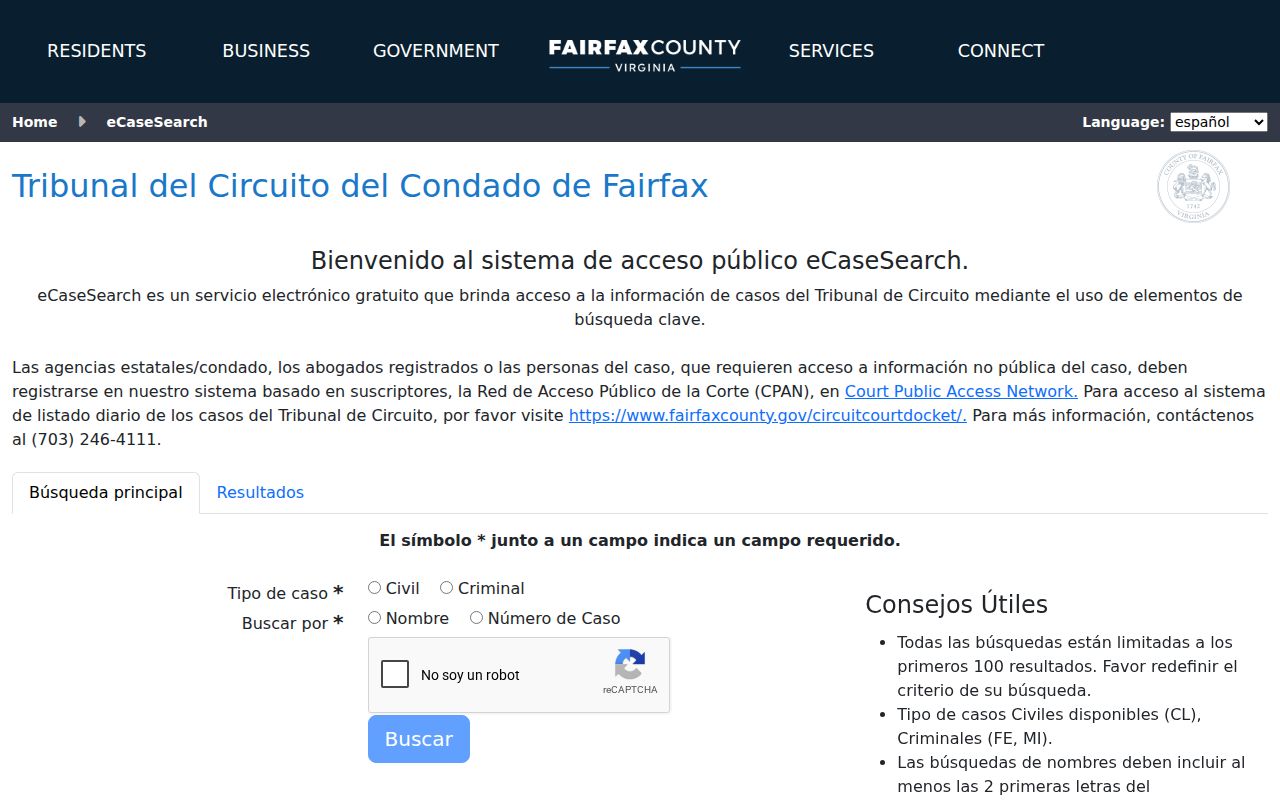
The form's tight fields make the larger point plain. An index result points you toward the custodian. It is not the file, and it is not proof of identity.
Note: Court files, juvenile matters, adoption files, and other protected material remain subject to court-specific access rules even when a name is known.
Woodlawn Voter Records Are Controlled
Virginia's online voter lookup serves one voter checking a personal record. It also serves a user with express authorization. Expect to supply a first name, last name, and full date of birth. You must also give the last four digits of a Social Security number, locality, and an authorization certification. Woodlawn falls under Fairfax County. The portal itself warns that unauthorized access can amount to computer fraud. That warning matters. This is not a browsing tool for a neighborhood. It also cannot confirm another person's current address.
The public registration list follows a different rule, Virginia Code §24.2-444. The registrar's list carries defined fields only. Those are name, residence address, birth year, gender, and election districts. Protected addresses and Social Security numbers stay out. Day and month of birth and other listed details stay out too. The Fairfax Office of Elections can explain the current in-person inspection and copying route.
The official Virginia voter lookup shows the authorization certification requirement before any status search runs.
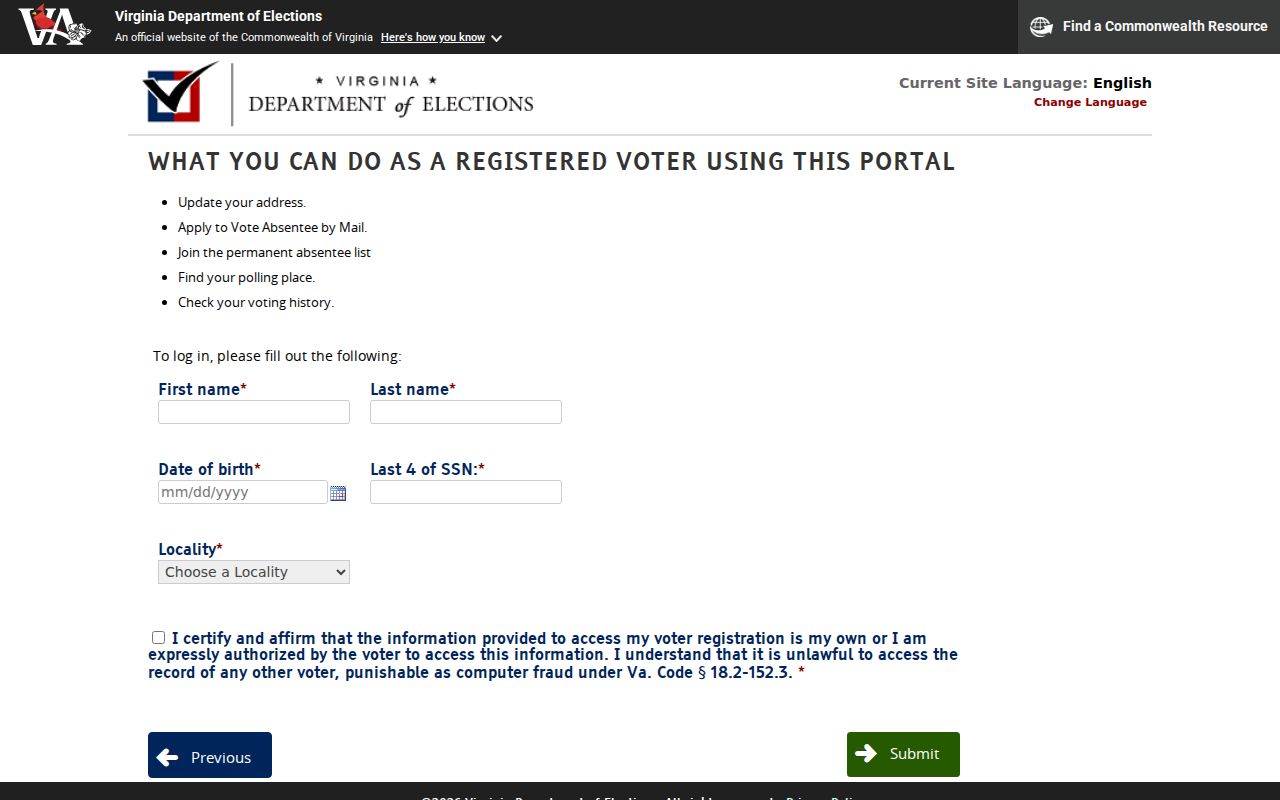
Its identity fields say it plainly. A public list and an authenticated status check are two different kinds of Woodlawn resident record.
Woodlawn Vital Indexes and Copies
Vital records work differently from a property or court index. A Woodlawn birth, death, marriage, or divorce runs through the Fairfax Office of Vital Records. It can also run through the Virginia Department of Health. Virginia Code §32.1-271 opens birth records to the public after 100 years. Death, marriage, divorce, and annulment records open after 25. A public index is still not a certified certificate. Restricted certificates go to eligible immediate family, documented representatives, or other qualifying applicants, with identification.
Fairfax local offices issue eligible certificates for Virginia events. Walk-in service is the norm there. Statewide routes include mail and online processing through the Virginia Department of Health. Each certificate or search costs $15, even when a local search comes up empty. A marriage request needs both spouses' full names. It also needs the exact date and place. The issuing circuit court must be named too. A divorce decree comes from the courthouse, not the health office.
The Virginia vital-records forms page lists application paths for birth, death, marriage, and divorce requests. It also covers related requests.
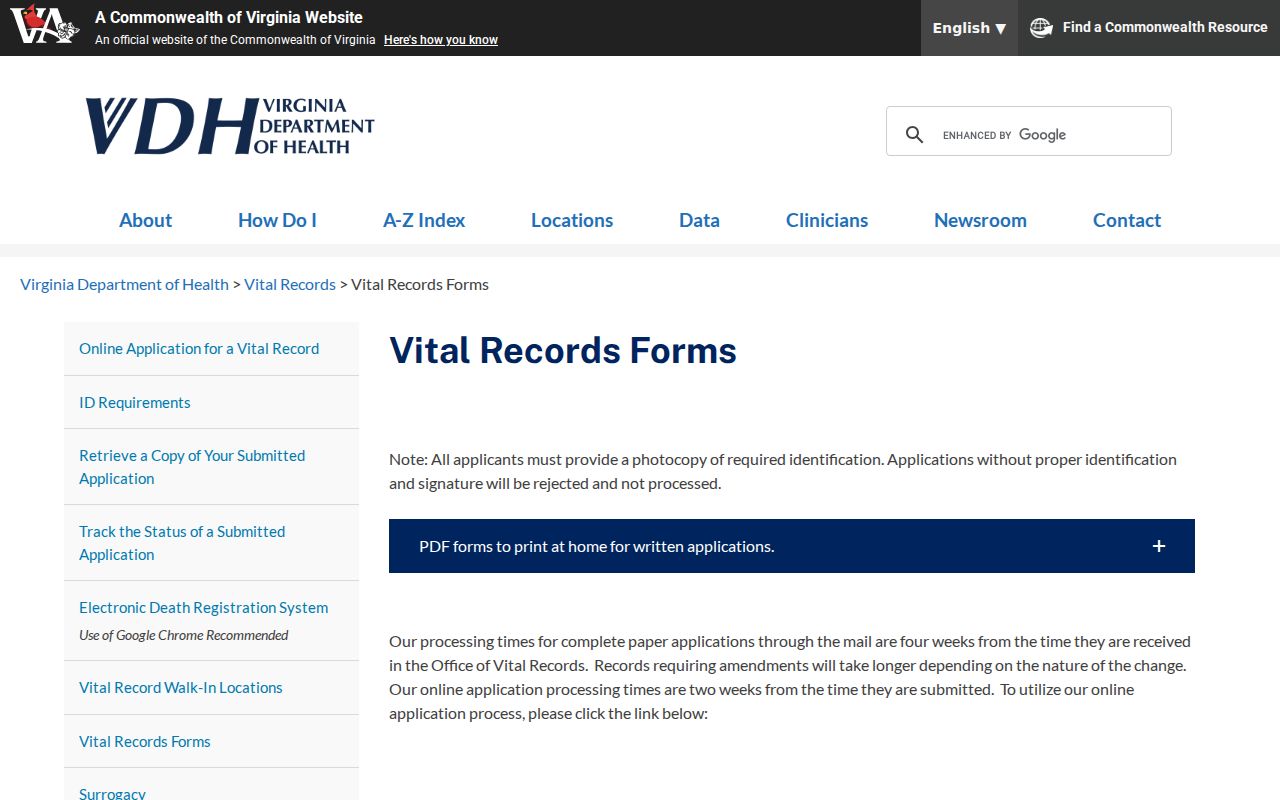
Match the form to the event. Then verify the eligibility rule before sending sensitive details or paying any search fee.
Current Woodlawn Resident Directories
No single roll lists every Woodlawn household. The useful directory-style sources each grew around a purpose: parcel ownership, registration, recorded conveyances, court parties, business affiliations, or historical names. Every one has a coverage gap. A property card names an owner of record, not every occupant. A voter list is regulated. A deed records a legal transfer, nothing more. Ask the right question first, and the right Woodlawn residents directory source follows.
| Source | What it can confirm | Custodian | Access limit |
|---|---|---|---|
| iCare assessment parcel | Owner, situs, mailing line, parcel, sales context | Fairfax DTA | Free online; no household list; name withholding possible |
| Recorded deed | Parties, transfer date, legal description, prior reference | Circuit Court Clerk | CPAN or terminal; document-specific restrictions |
| Public voter list | Defined registration fields | Fairfax registrar | Controlled public access and protected-field exclusions |
| Directory and yearbook holdings | Historic address, school, occupation, household context | Virginia Room and repositories | Irregular coverage, not a current roll |
| Neighborhood association pages | Public meetings, events, and community vocabulary | Local associations | No public member roster located |
A name that needs careful confirmation belongs in the Woodlawn resident lookup sequence. Source dates and same-name checks come first there.
Woodlawn Requests for Offline Records
When a record family has no public web index, go straight to the custodian. That custodian sits in Fairfax or with Virginia. Virginia's Freedom of Information Act, Va. Code §§2.2-3700 through 2.2-3715, rewards reasonably specific requests. Section 2.2-3704 calls for a response within five working days in most cases. The office may provide the records, or withhold them with a written reason. It may report them unavailable. It may also invoke additional time when a practical response will not fit the window.
The law permits reasonable actual costs for access, search, copying, and supply. A custodian can estimate charges and ask for a deposit once expected costs pass $200. VFOIA bends to nothing else here. It cannot override a confidentiality statute or a sealed court rule. It cannot override a protected voter address, a driver-data restriction, or a vital-record eligibility rule. Name the record series, the date range, and the property identifier or case number. State the format you want. A narrow request hands the office a workable target.
Note: A custodian's reply that a record is exempt, missing, or held elsewhere is not a finding. The person or event may still have existed.
Woodlawn State Locator Tools
Virginia keeps two state locators. The Department of Corrections tool takes a first-name fragment with a full last name or a DOC ID, and it refreshes daily. An accuracy disclaimer rides along. The State Police registry, a statutory public-notification database, searches by name, registration number, street, city, county, ZIP, or a radius around a neighborhood. Neither tool is a Woodlawn residents directory. No hit proves residency at a private address. The Virginia Department of Corrections locator shows its name and DOC ID search route.
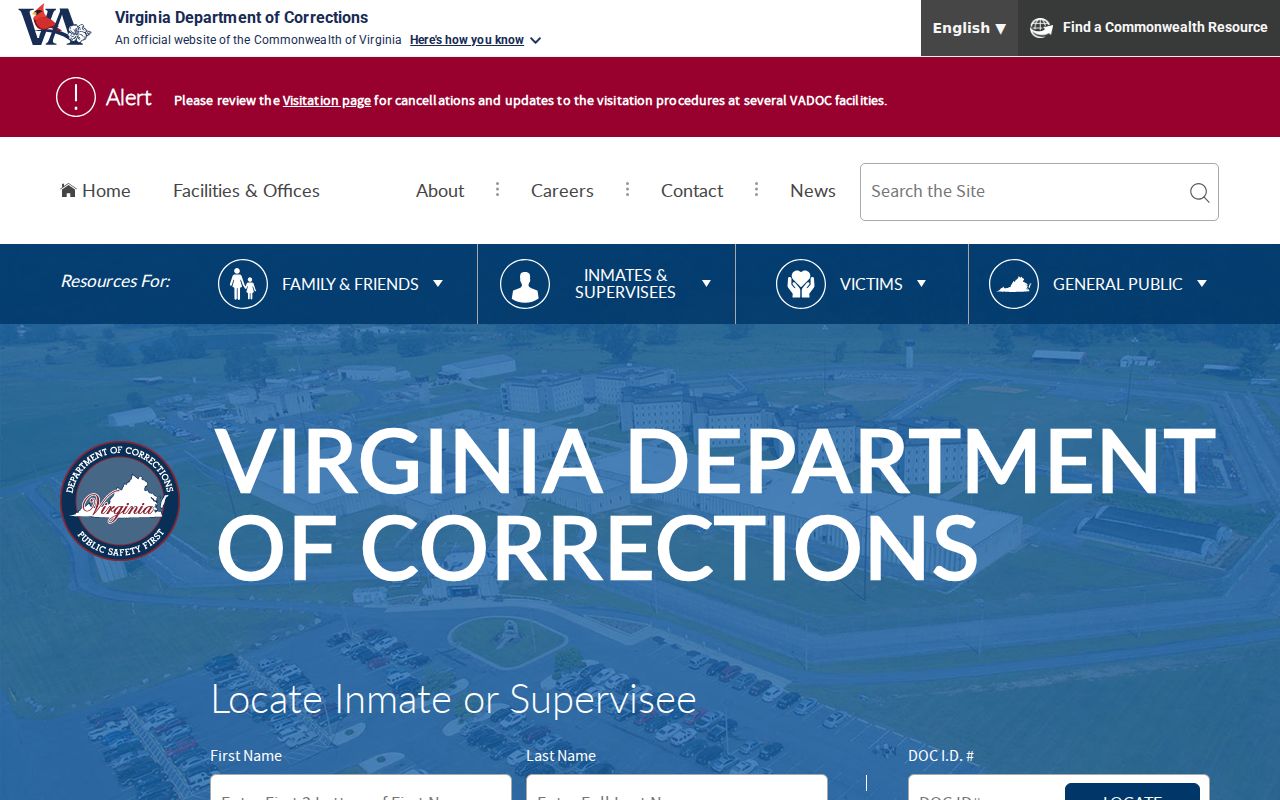
Daily refreshes still lag or shift. Give every result its date and statutory context. The Virginia State Police registry page shows its address and neighborhood mapping controls.
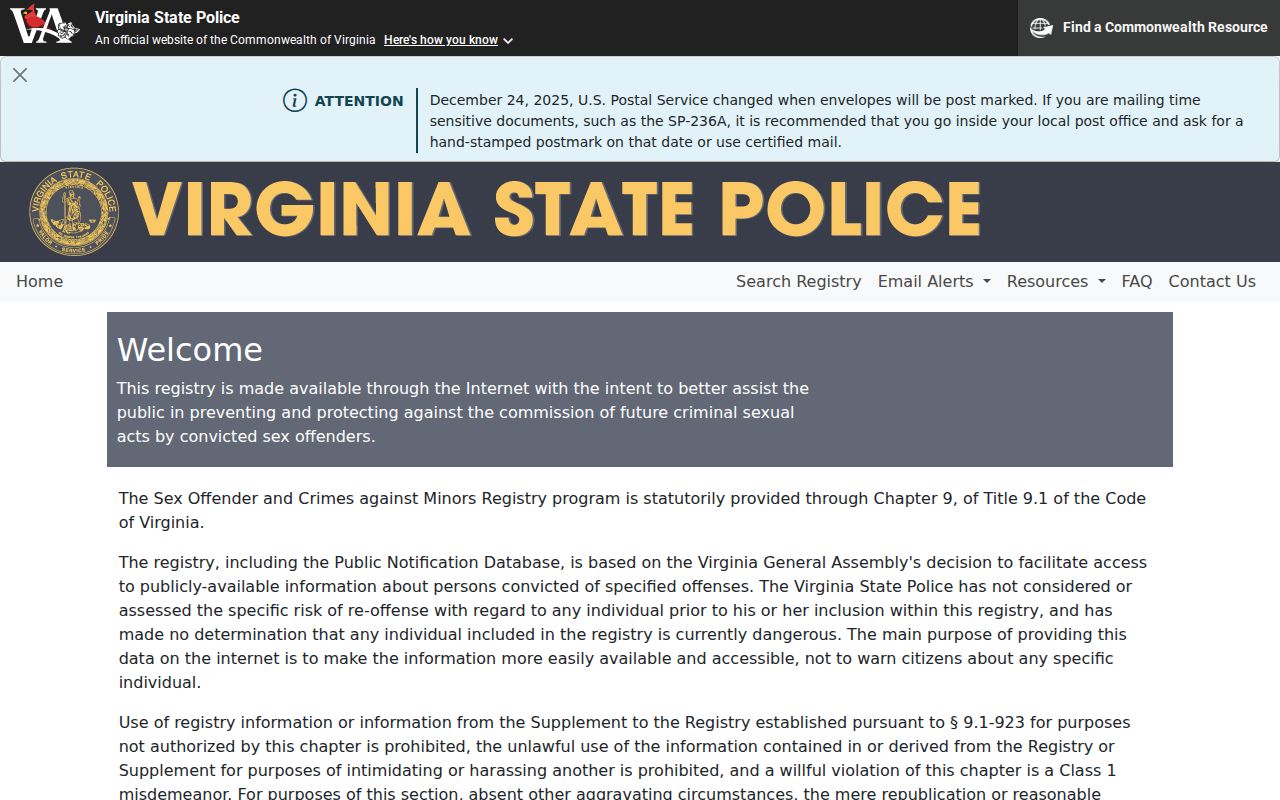
Never trust a screenshot alone. Go to the official record page and its safety notice whenever the statutory database matters to a lawful public-safety question.
Woodlawn Business and Property Leads
A business question needs a business record. Guessing from a private address is not research. The State Corporation Commission's Clerk's Information System, CIS, searches registered entities along with UCC filings and tax liens. A result can surface an entity name or ID, filing status, principal-office or registered-agent details, and dated filings. Fairfax Circuit Court records hold trade-name material too. The Department of Professional and Occupational Regulation runs its own public license lookup. Search fields include name, number, address, and license type. The SCC CIS entry point is where an entity or UCC question should start.
A filing trail is one thing. A company record can confirm an official affiliation. It cannot show that a person lives at the business or agent address. Virginia Treasury's vaMoneySearch is free and can supply a historical name or address lead for a claimant, though claims require evidence and a match is not proof of current whereabouts.
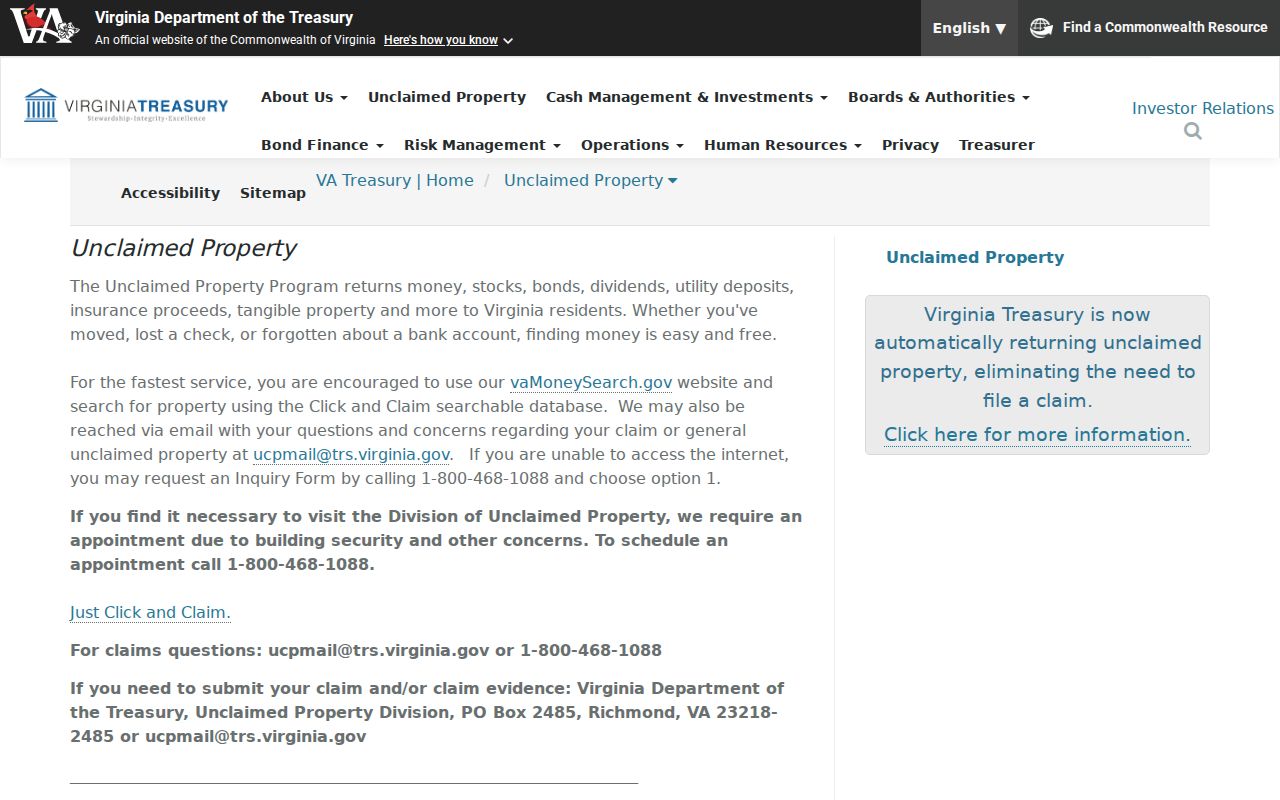
That gap makes unclaimed-property leads useful for family history.
Historical Woodlawn Resident Directories
Woodlawn has no municipal directory shelf of its own. Historical residents directory work here is regional by necessity. The Virginia Room at City of Fairfax Regional Library anchors the search with directories, telephone books, maps, newspapers, yearbooks, photographs, manuscripts, and subject files. Eight internet stations, a CPAN station, and a microform reader-printer keep it practical once a screen index runs dry. The Library of Congress holds Washington Metropolitan telephone directories from 1933 through 1945, open as images, PDFs, and text. Coverage stays regional. A missing Woodlawn address in one volume proves nothing about the area.
The statewide Virginia city-directory collection is described as spanning 1873 through 1960. Exact Woodlawn or Fairfax shelf runs go unlisted. Search Woodlawn, Alexandria, Fairfax, Mount Vernon, and Washington Metropolitan. Spelling variants and surname initials matter. Check them all. Collection methods, entry conventions, and access gaps fill the Woodlawn city directory page.
Woodlawn's Lost Deed Book Years
Woodlawn's address history has a hard archival break. Fairfax County formed in 1742. Civil War destruction then took original wills, deeds, and loose papers, and deed books from 1763 through 1819 are missing. So are many pre-Civil War minute books. A dead search can mean a lost book, an incomplete index, a changed legal description, or a mismatched term. That never settles a family or parcel connection.
Overlap your sources. The Historic Records Center holds deed books, real-estate tax books from 1851 through 1980, and the 1860 Fairfax property-owner maps. Church registers, newspapers, and Library of Virginia microfilm add more angles. A June 2025 preservation grant funded conservation of the 1879 Fairfax atlas and the 1892, 1900, and 1910 land-tax books. Fragile sources once out of reach may now be open.
Woodlawn Address Labels Need Context
One Woodlawn spot can wear five labels. A single parcel might carry an Alexandria postal city, a Fairfax County tax jurisdiction, a Mount Vernon District label, a Woodlawn historic-overlay flag, or a Fort Belvoir legal description. The county Master Address Repository, MAR, is the authority on current site addresses and street names. The ZIP map answers postal geography. iCare answers assessment. CPAN answers title. One blank tool proves nothing.
Compare records carefully. Use the full street, directional prefix, suffix, unit, and normalized postal form. The county publishes no Woodlawn-wide renumbering year. Older research should lean on roads, owners, legal descriptions, estate terms, and historic maps rather than a guessed conversion. The July 2026 MAR redesign added mobile-friendly address, street, and parcel filters with exports. That bridge helps tie an old postal label to the county's current address authority.
Woodlawn Records Have Privacy Limits
Virginia law walls off big chunks of resident research. The Address Confidentiality Program gives eligible survivors a substitute mailing address. Driver and vehicle data carry separate statutory restrictions. Voter records omit protected fields. Court rules govern sealed, juvenile, domestic-relations, and adoption case material. The Virginia Consumer Data Protection Act grants qualifying consumers rights with covered businesses, yet it cannot erase a recorded deed, suppress a court index, or bypass an official eligibility rule.
Lawful personal use. Woodlawn record research is for family history, reconnection, estate questions, civic curiosity, and personal safety awareness. Do not use any record to stalk, harass, intimidate, or harm another person.
A privacy problem starts with one question: who actually holds the record? A library collection, a court file, a county assessment display, a state data controller, and a voter register can each sit with a different custodian. That means the law and the removal process differ from one office to the next, so identify the keeper before you ask for a change or a deletion.