
Woodlawn City Directory Collection Routes
Woodlawn has no separate municipal directory shelf. Its historical trail is regional, which makes repository notes as important as a surname. The Virginia Room and its catalog are the local starting point, while online collections provide selected runs. Search the Alexandria, Fairfax, Mount Vernon, and Washington Metropolitan labels before deciding a household is missing. The statewide Virginia collection description gives a useful range, but it does not establish that every listed year contains Woodlawn.
| Collection | Years | Where Held | Access |
|---|---|---|---|
| Virginia city-directory collection | 1873-1960 collection description | Library of Virginia source collection and local catalog leads | Confirm the locality and volume before treating a year as Woodlawn coverage. |
| Washington Metropolitan telephone directories | 1933-1945 | Library of Congress digital collection | Free image, PDF, and text formats; regional coverage varies by address. |
| U.S. city and business directories | ca. 1749-ca. 1990 collection range | FamilySearch | Index online; image access can require an account or affiliate location. |
| FCPS yearbooks | 300+ digitized since 2016 | Virginia Room and Internet Archive | Keyword-searchable digital titles; physical gaps remain in the Rare Book Room. |
Telephone books and directories are time-specific listings, not a complete roll of every person. Record the year, locality label, page, and whether the entry came from an alphabetical, address, or classified section. That small citation makes a later comparison much more reliable.
Woodlawn Regional Records Geography
Woodlawn is a Fairfax County census-designated place, not the independent City of Alexandria. Yet a historical listing or modern mailing line can say Alexandria, Virginia. That comparison explains why a regional book search may reach a telephone volume before it reaches a volume titled Fairfax. It also means a postal label should not be used to move a Woodlawn family into a different court or tax jurisdiction.
For an older rural address, test roads and landmarks as well as the surname. Route 1, Richmond Highway, Mount Vernon Memorial Highway, Woodlawn Road, and the Mount Vernon label can bridge a modern address to earlier geography. A reverse section is valuable only when the particular volume includes one, so check the contents rather than assuming an address index exists.
Woodlawn's historic overlay also spans five research eras: Dogue Run Farm, Lewis, Quaker/Mason, Country House, and Public Ownership. Early evidence is more likely to be organized by estate, church, tax district, land description, or owner name than by a familiar street number. Match the source to its era. An 1860 owner map or a church register can be a better first lead than a twentieth-century directory for an older family connection.
Note: Keep the directory label beside each result because regional volume titles and Fairfax County jurisdiction answer different questions.
Woodlawn's Virginia Room Shelf
The Virginia Room is the practical local shelf for a Woodlawn directory-volume search. It is at 10360 North Street in Fairfax. Researchers can reach staff at 703-293-6227, option 6, or va_room@fairfaxcounty.gov. The room brings together local maps, photographs, manuscripts, newspapers, rare books, subject files, and genealogy material, which helps when a directory entry needs context rather than a simple name match.
The Virginia Room has eight internet stations, a CPAN station, and a microform reader-printer that can save to USB. Staff can help identify a collection, but the researcher should retain the call number and the reel, page, image, and access date. Its local-history menu also points to city and telephone directories, property history, yearbooks, newspaper tools, oral histories, and manuscript collections.
See the Virginia Room local-history page before a visit.
Its in-person tools matter when a scanned index ends at a surname or when a microfilm volume holds the only usable address context.
Woodlawn Telephone Directory Years
The strongest verified digital regional run is the Library of Congress Washington Metropolitan telephone-directory collection for 1933 through 1945. It supplies image, PDF, and text formats. A Woodlawn search may surface under the broader Washington Metropolitan geography, which is a normal result for this area.
The broader Virginia directory collection is described as spanning 1873 through 1960, and typical entries include a resident name, street address, and occupation. Some editions may add an address or telephone cross-reference. Exact Fairfax County or Woodlawn shelf years were not exposed in the official repository material, so call the Virginia Room or inspect its catalog before claiming a local run exists for a particular year.
FamilySearch's city and business directory collection can add indexed names, addresses, and business context. Its images may be contract-restricted, so an affiliate library or center can be the necessary fallback.
Reading Woodlawn City Directory Entries
Read each city directory entry as a compact, dated observation. The usual fields are a surname, given name or initials, and street address. An entry can also include an occupation, spouse reference, employer or business, and telephone information. A blank field has no single meaning. It may reflect the publisher's practice, an unlisted number, or a collection gap rather than a household change.
| Name and initials | Capture spelling, initials, and alternate forms exactly as printed. |
|---|---|
| Street address | A period address that should be compared with roads, maps, and later parcel records. |
| Occupation or business | A useful distinguishing detail when two people share a name. |
| Spouse or household note | An optional parenthetical clue that should be preserved verbatim. |
| Phone or exchange | An optional telephone-volume detail, not proof of a complete household. |
- Criss-cross directory
- An address-organized section that can identify listings associated with a street when that volume includes one.
- Householder index
- A name or address arrangement centered on the listed household, not a proof of every person at the property.
- Abbreviation key
- The volume's own guide to its shorthand. Marks such as wid, r, or h vary by publisher and year, so verify the key before expanding them.
Trace Woodlawn City Directory Households
A household trail is strongest when it follows one detail at a time. A directory can show a move between decennial censuses, a changed initial, or a newly noted spouse. Federal census schedules from 1790 through 1950 are public and can help separate same-name entries through ages, household composition, and nearby families. Do not jump from a directory address to a statement of property title.
- Start with the known surname and year, then search spelling variants and initials. Save the exact page and every printed field.
- Check the same address in a reverse or criss-cross section when the volume contains one. Test Alexandria, Fairfax, Mount Vernon, and Washington Metropolitan labels.
- Compare adjacent directory years, not only census years. Note moves, changed household markers, and revised business or telephone details.
- Pair the time period with the federal census, using ages, neighbors, and household composition to distinguish similar names.
- Use iCare and land records only to confirm later recorded ownership, then preserve the source boundaries in the research notes.
A name disappearing from a book can mean a move, death, changed listing practice, or no covered volume. The Virginia Room's Historical Newspaper Index, church records, probate material, and cemetery sources can help test those possibilities without turning an absence into a conclusion.
Woodlawn Yearbooks and Newspapers
When a city directory misses a Woodlawn name, school material is a strong companion source. Fairfax County Public Library has scanned more than 300 yearbooks from 36 FCPS schools since 2016, and nearly 500 physical yearbooks remain in the Virginia Room's Rare Book Room. The digital collection is keyword-searchable through Internet Archive. A class page, club listing, memorial notice, or advertisement can distinguish a person with a common surname.
The Historical Newspaper Index is another lead, but it is selected and nonconsecutive, not a complete obituary database. Its guide covers ten Northern Virginia titles with irregular spans. Searches can use up to three terms, source checkboxes, and date filters. Many results point back to Virginia Room microfilm, where scans can be saved or copy requests can be made at the documented per-page rate.
Early church records may fill an older gap: the FamilySearch catalog resources include Alexandria Monthly Meeting, Christ Church/Fairfax, Truro Parish, and First Presbyterian runs. These registers can supply baptism, marriage, burial, or membership leads where a later directory has no coverage.
Woodlawn Directory Gaps and Losses
Fairfax County's record history explains why a directory can become more useful when a title search stops. Original wills, deeds, and loose papers suffered Civil War destruction. Many deed books from 1763 through 1819 and numerous pre-Civil War minute books are missing. A failed land-record search can therefore reflect loss, an indexing gap, or a legal-description mismatch.
For that period, use the Virginia Room, the Historic Records Center, and the Library of Virginia as parallel routes. Historic tax books, property-owner maps, church registers, and regional newspaper material may preserve a name or place link that a missing deed book cannot. The Woodlawn street records route is the better handoff when the goal is a modern parcel rather than a historical household listing.
Note: Cite the repository and missing-series caveat when a gap affects the conclusion, rather than describing a no-hit as a no-history result.
Woodlawn History Preservation Updates
Fairfax's historical shelf is still changing. On June 24, 2025, the Circuit Court announced a Library of Virginia preservation grant for the 1879 Atlas of Fairfax County and land-tax books from 1892, 1900, and 1910 at the Historic Records Center. The grant is a good reason to check current availability with the repository instead of assuming a fragile source cannot be consulted.
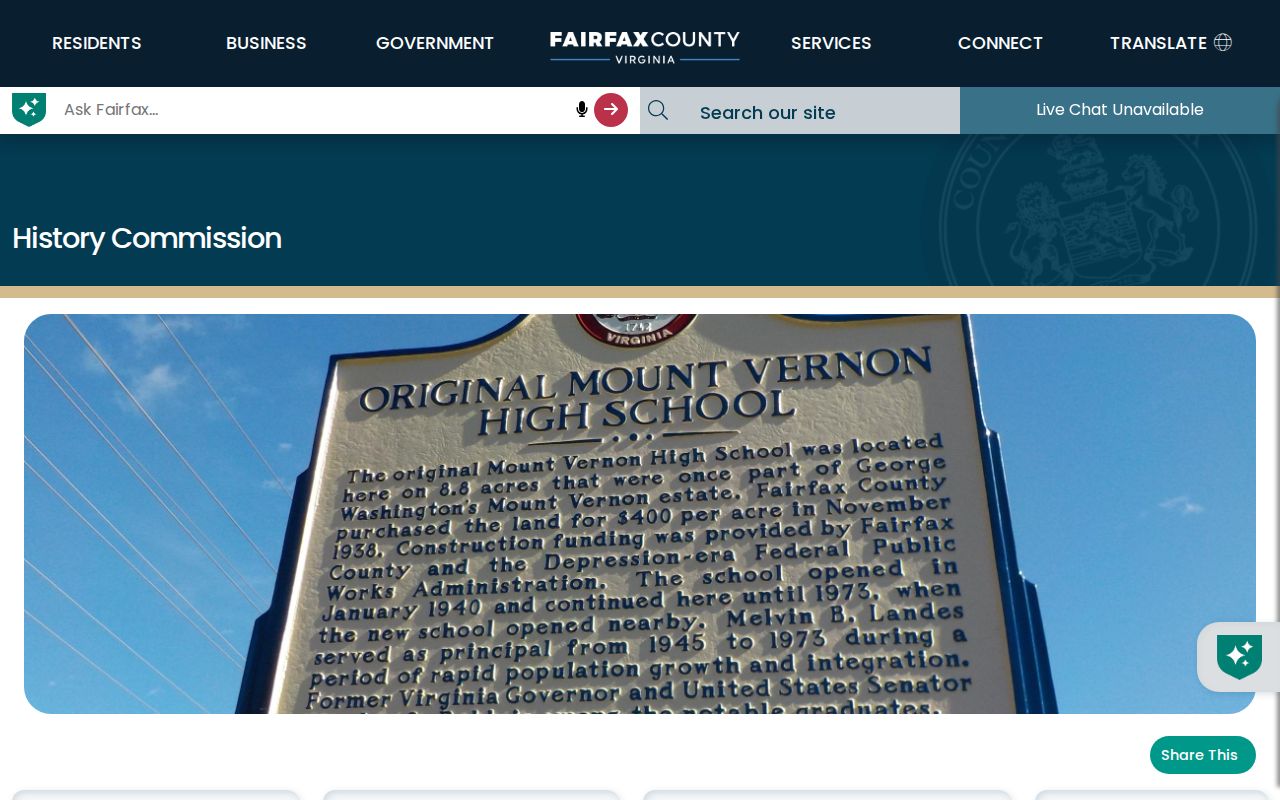
The Fairfax History Commission supports local-history preservation and is a useful routing point for the county's broader historical context.
Preservation improves discovery, but it does not restore lost Civil War-era books or make every historical index searchable by name. Keep the book, reel, image, page, and access date with every Woodlawn result.